
A mother writes to Ertheo asking what a full year at a football academy in Spain would cost for her fourteen-year-old. She has spent two weeks reading academy pages and has concluded that this is what he needs. She may well be right. But the first thing anyone who knows this from the inside sends back is not a price: it is a question. Has he ever spent a week inside one?
It is not a sales question. It is the one that separates the families who get this right from the families who spend a great deal of money on the wrong programme. When you are weighing up a football camp or academy, what you actually have in front of you is three different programmes — the camp, the tryout in front of scouts, and the full-year academy — which look similar enough to be mistaken for one another, and which are meant to be done in an order.
All three are in Ertheo’s catalogue and all three solve different problems. This guide explains what each one is, why the order matters, and how to tell which one applies to you right now. If you already know, you can go straight to all the football programmes, by destination and level.
Table of Contents
The three football programmes, side by side
| Camp | Tryout in front of scouts | Full-year academy | |
|---|---|---|---|
| How long it lasts | 1 to 4 weeks | Four or five days, depending on the destination | 3 to 11 months |
| What it is for | Training hard and measuring yourself | Being seen, and assessed in writing | Developing daily while staying in school |
| Ages | 8 to 21 | 11 to 23, depending on the destination | Depends on the academy and the level |
| Level it asks for | From beginner upwards | Advanced or elite | The academy decides |
| School | None: it runs in the holidays | None | Inside the programme |
| Who is watching | The camp coaches | Scouts from professional clubs | The academy’s coaching staff, every day |
| What you take home | Weeks of training and a read on your level | An individual written report and video analysis | A school year completed, with the academic record |
The camp: a lot of training in a short time
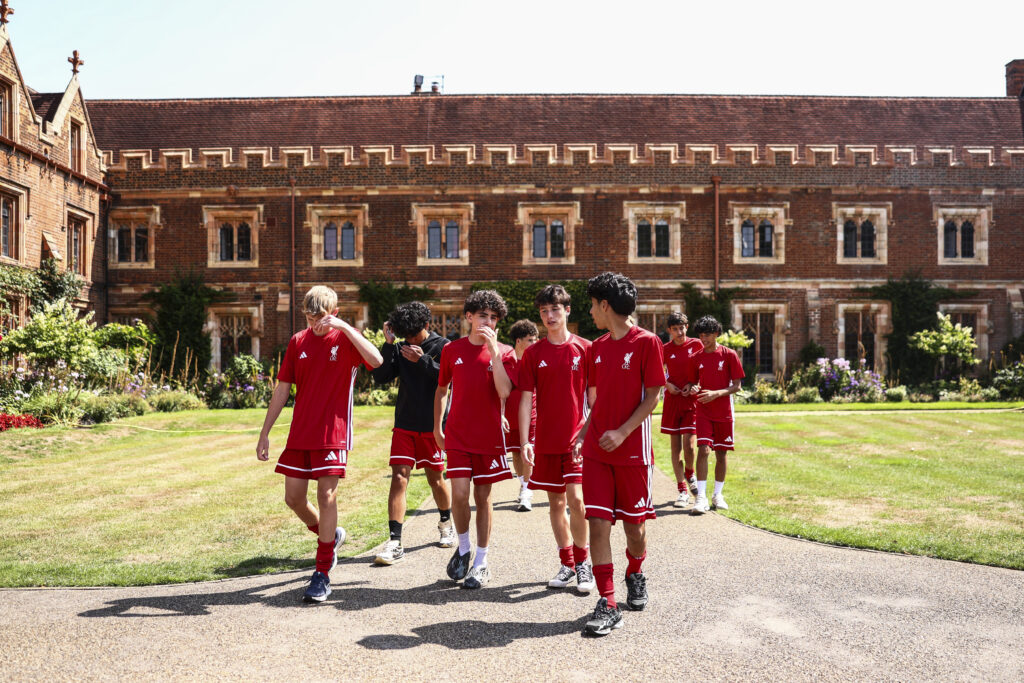
A camp is a stay of one to four weeks, in the summer or in the school holidays, in which the player trains every day and lives alongside players his own age from many countries. It takes players from 8 to 21, from the one just starting out to the one playing at national level: the groups are organised by level, and that is where almost all of the value sits.
Many of these camps are run by big clubs — Manchester City, Arsenal, Chelsea, Tottenham, West Ham, Aston Villa, Atlético de Madrid, the FC Barcelona Escola, AC Milan, PSG — at their own facilities and with their own methods. That is why most families come in through this door: the badge is recognisable and the decision feels less risky.
What is worth understanding is what a camp actually solves. It is not designed to get your son signed. It is designed so that he trains a great deal in a short time, measures himself against players he does not know, and comes home knowing something he cannot find out at his own club: where his level sits once you take away his usual surroundings. For a twelve-year-old who has never played outside his local league, that is more useful information than any tryout.
It is also the cheapest of the three, and the only one that does not touch the school year. The dates and destinations for each season are on the page for summer soccer camps for young players.
The tryout in front of scouts: getting assessed in writing
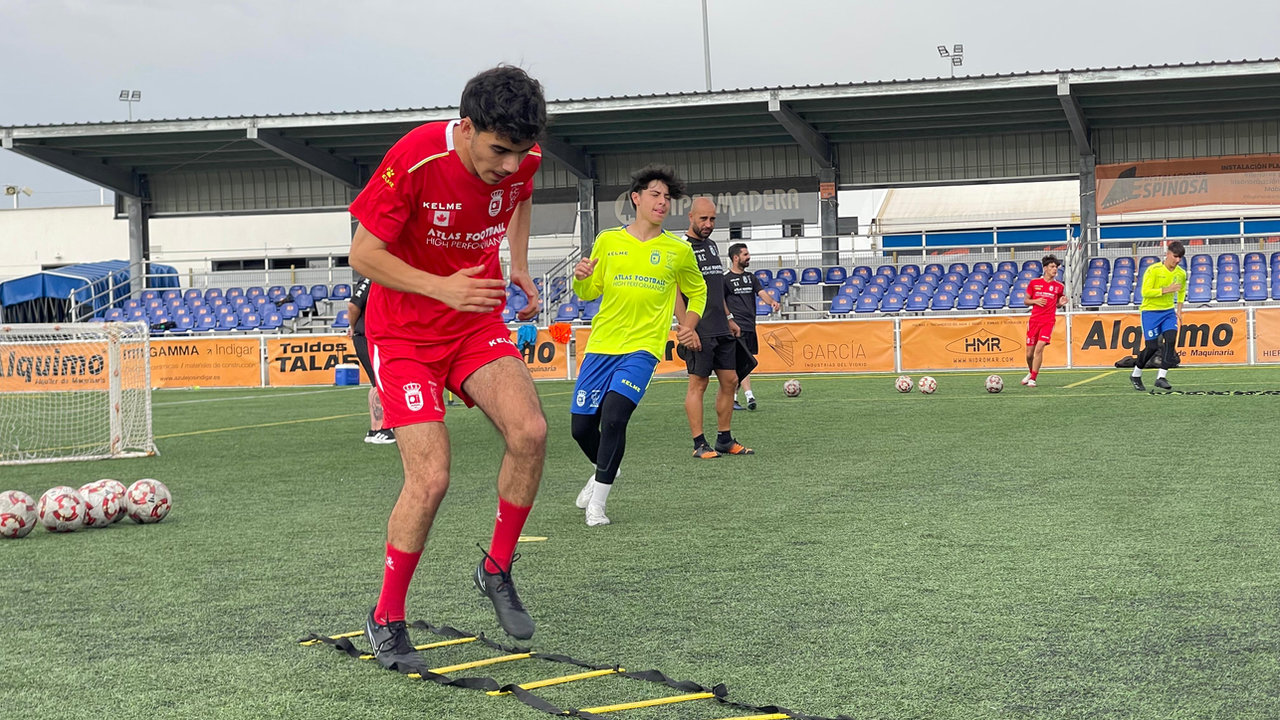
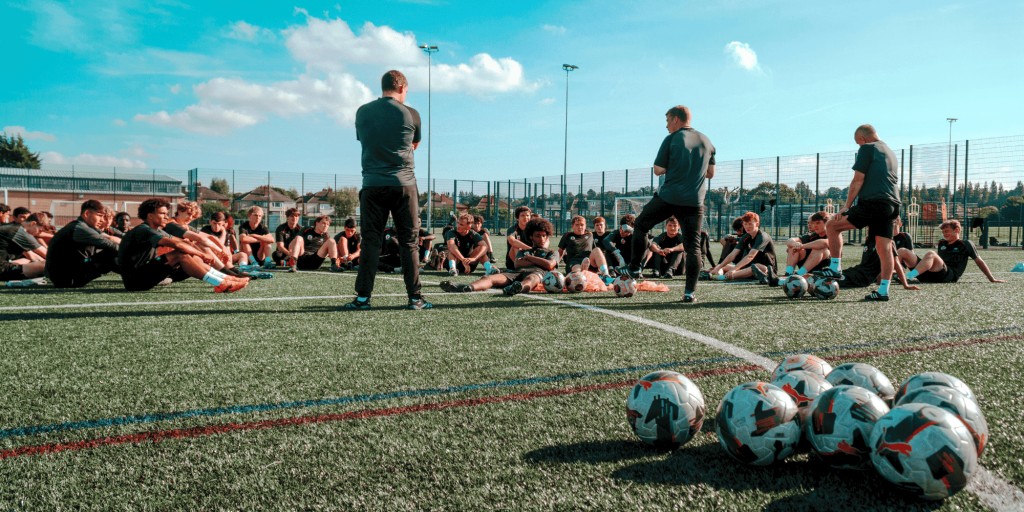
Here the objective changes. A tryout is not a camp with an assessment tacked on at the end: the whole thing is built around the evaluation. It lasts a few days — four or five, depending on the destination — and everything that happens in them is designed so that somebody takes notes on the player. In Barcelona, that session can also be preceded by one or two weeks of training.
What it includes, specifically:
- Several training sessions with professional coaches, spread across several days.
- Technical and tactical assessment by coaches holding a UEFA PRO or CAF PRO licence.
- Scouts and representatives of professional clubs watching, which is the point of the whole thing.
- An individual written report for every participant, whatever happens.
- Video analysis with VEO cameras, and GPS data from the sessions.
It asks for advanced or elite level, and the ages run from 11 to 23 depending on the destination. Those bands are guidance, not an entry requirement: a player who falls just outside is a conversation, not a no. What it is not right for is a player who is still developing — he would be paying for an assessment that can already be predicted.
Which clubs are watching
This is what to look at before you compare prices, because it is what separates a real tryout from a training week under another name. The clubs taking part change from session to session:
- England, in the winter session (16 to 23 years old): Tottenham Hotspur, Derby County, Bolton Wanderers and Northampton Town FC.
- Barcelona (the Catalan coast, 12 to 23 years old): Girona FC, CD Leganés, SD Huesca, CD Castellón, FC Andorra and Albacete Balompié — clubs from LaLiga and LaLiga2.
- Madrid (Talavera de la Reina, 11 to 23 years old): Atlético de Madrid, CD Leganés, Boavista FC, SD Huesca and CD Cazalegas.
In England the set-up is different, and it is worth describing accurately, because it is the better of the two arrangements: the clubs do not each send their own staff scout separately. The work there is done by an agency with more than a hundred scouts across the United Kingdom, and the clubs listed above are a selection of the ones that agency represents, from different leagues. Two consequences follow: the list is not a closed one — there may be more clubs than those named — and a scout who works for several clubs opens several doors in the same afternoon, which is the opposite of a downgrade.
And one condition that has to be said before anyone gets their hopes up: each club’s attendance depends on its own fixture calendar. The confirmed list for a particular session is given to the family before they travel, and the football tryout programmes for each season are where that is kept up to date.
If the scout is coming anyway, why am I paying?
Because these are two different things, and they are worth keeping apart.
When a club has already decided it wants to see a player, it calls him itself. You cannot buy that call anywhere: it is earned by being found. And that is where the real problem sits, and it is not a problem of money — there are good players nobody from that world has ever watched play, because nobody from that world passes through their pitch.
An open tryout solves exactly that, and what you pay for is concrete: accommodation and full board, the pitches, the coaching staff, the video analysis, the report, and the cost of bringing scouts from active clubs to come and watch. Put as briefly as it can be put: you are not paying for the scout’s judgement, you are paying for the days that put you in front of one.
And what comes next, if you stand out, is not paid for
A tryout does not end with the report: it is the first of three steps, and the other two cannot be bought.
| What it is | Who pays for it | |
|---|---|---|
| 1 | The tryout: a few days — four or five, depending on the destination — for the scouts and the participating clubs to see you | The family, always |
| 2 | If you are selected, a week at that club’s own training ground, training with its squad and in front of its coaching staff | Nobody: it is earned, not bought |
| 3 | If you stand out there as well, a professional contract | — |
That table is worth reading carefully in both directions. Step 2 genuinely exists, and it is the difference between a tryout and a PDF: there is a real door into a professional club’s training ground. But neither step 2 nor step 3 is ever promised, and nobody should sell them as likely. “The standouts” does not mean “your son”, and no programme guarantees a contract.
What there is for everybody is the written report. A fifteen-year-old who comes home without an offer but with a document that says what he does well, what he is missing and how far he is from a professional club has not wasted the week: for the first time he has a diagnosis that comes from neither his coach nor his father.
The full-year football academy: a year away from home
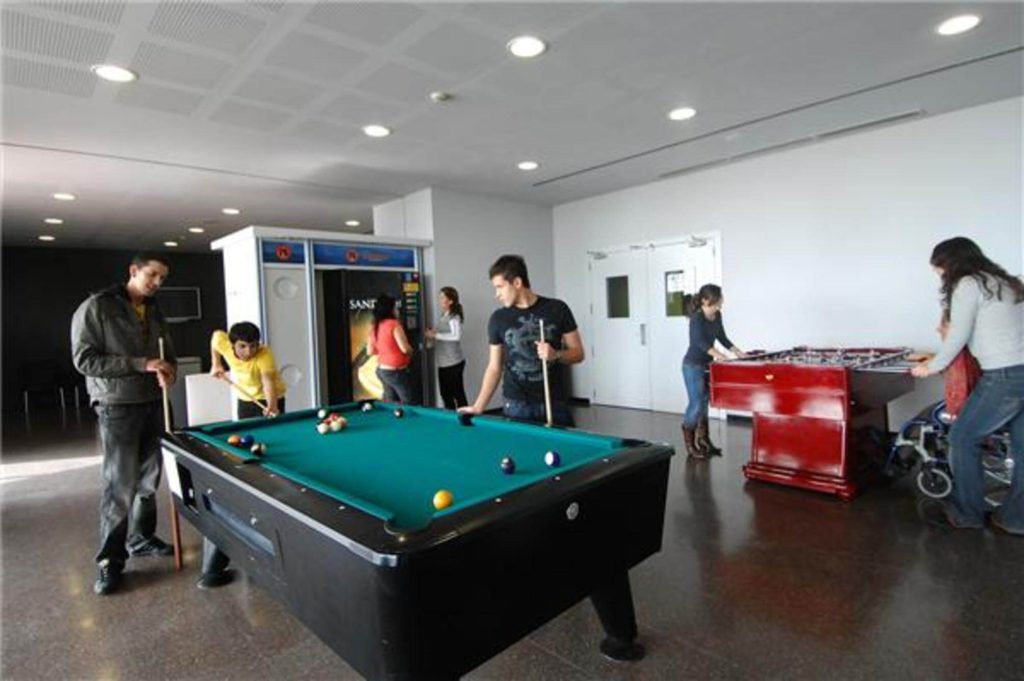
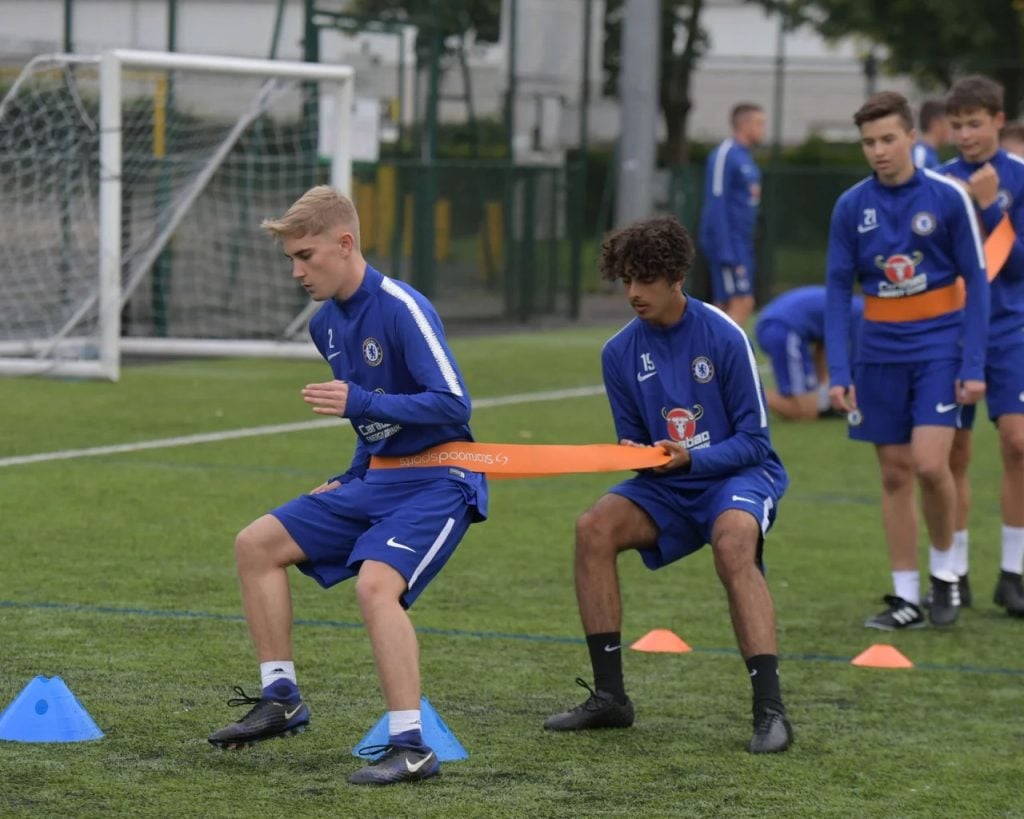
An academy is a programme of 3 to 11 months. The player relocates, lives at the academy or in an associated residence, trains every day with professional coaches and carries on with school inside the same programme, with full board and round-the-clock supervision.
That sentence about school is the one people skim, and it is the important one: in an academy school is not something the family sorts out separately, it is included, with the timetable arranged around training. There are academies in Spain, the United Kingdom, France, Italy, Portugal and the United States, and each one has its own education system and its own entry dates.
And it is a different kind of jump from the other two. It is not a jump in football level: it is a jump in how he lives. Your son stops living at home, changes school system and, depending on his nationality and on where he is going, he may need a visa: a stay of more than ninety days in Europe usually needs one for players from outside the EU and the EEA, while a player on a US passport going to the academies in Arizona or Virginia, or one on a British passport going to England, needs none. It is nationality and destination together that decide, and it is the first thing a consultation settles. That is why no academy is sold through a web form: there is a compulsory advisory call, because prices, visas, school options and entry dates all vary by academy and by the player’s nationality.
It costs many times what a camp costs. The figures for each programme, broken down by duration, are published on the page for full-year football academies in Spain.
Why the order matters, and neither reason is commercial
The recommendation, put plainly, is that before you commit to a full year, the player should first do a short stay at the academy you have in mind, a camp, or a tryout. There are two reasons for that, and both of them sit on the family’s side of the table.
1 · A week costs what a week costs. A year does not
A full year abroad is a decision worth tens of thousands of euros, and a year of a teenager’s life. Taking it blind, from photographs on a website and one phone call, is a great deal of risk on very little information.
One or two weeks at that same academy answer, in person, what no brochure answers: whether the boy fits the method, whether he can handle the intensity, whether he copes with sleeping away from home, how he gets on with the language, and whether the place is what it looked like. It is the cheapest check there is on the most expensive decision you are going to make. And if the answer is that he does not fit, having paid for one week to find that out is the best-spent money in the whole process.
2 · Scholarships exist, and they only reach players the academy has seen play
Some academies offer scholarships, full or partial, for their full-year programmes. They are not guaranteed — nobody can promise one — and and there is no form to fill in to ask for one. The condition is a strict one: they are only offered to players the academy has seen in person, and the staff look not only at how the boy plays but at his attitude during the stay.
Which means that the short stay at the academy itself, the camp and the tryout are also the only door to that possibility. A player who writes in asking for a place for the year has no way of reaching it; one who has spent a week training in front of that coaching staff does. It is not a promise. It is the only route by which the question even gets asked.
Football camp or academy: which of the three applies to you now
What decides it is not age: it is level and timing. Four situations that cover almost every case:
- He plays for his club, he is doing well, and he has never trained outside his usual surroundings. The camp. It will give him a reference point for his level, and give you information you do not have today. Talking about the rest is premature.
- He clearly stands out in his age group and you are wondering whether there is a real future in it. The tryout. What is missing is not more training: it is an outside judgement, in writing.
- You already know he wants to make a career of this, and school and football have started to collide. The full-year academy — but with a short stay at the academy you are considering first. That clash of timetables is exactly what an academy is designed to solve.
- He is 18, 19 or 20 and nobody has signed him. The tryout, and without any drama about it: not having been signed at that age says nothing about his level. It says he was not where somebody was watching.
If you finish reading this still caught between two of them, the practical rule is to start with the shortest. Getting it wrong downwards costs a week. Getting it wrong upwards costs a year.
What none of the three can promise
No programme guarantees a professional contract. None guarantees a scholarship. None of them turns a player who is not going to make it into a professional, and be wary of anyone who tells you otherwise, because it is the easiest promise to make and the hardest to keep.
What all three do, each in its own way, is take away uncertainty: they put the player somewhere he can be measured, and the family somewhere it can decide on information instead of guesswork. For most of the families who arrive asking about a full year, the step that was missing was the one before.
If you want to sharpen one of the three decisions on its own: how a football school differs from an academy, what a trial day at a professional club is really like and how the hours split between classroom and pitch inside an academy.