
The question every parent asks before sending a child away for a year at a football academy is not how many hours he trains. It is when does he study. And behind that one sits another, which almost nobody says out loud: whether school will end up being the thing that gets sacrificed once football gets demanding.
The short answer is no, and the reason is structural: in a football academy with studies the academic side is not an extra the player fits in where he can. It is a part of the programme, built on agreements with education providers and designed specifically for high-performance athletes. Below is the whole day, hour by hour. If you are still deciding whether what your son needs is this or an ordinary football school, start there.
Table of Contents
A full day, hour by hour
This is the day of a resident player at the high-performance academy in Barcelona. It varies from one academy to another — we come to how much below — but the shape repeats almost everywhere: two pitch sessions, an academic block split in two, and fixed mealtimes.
| Time | What happens |
|---|---|
| 07:30 | Wake-up and activation. A light breakfast to get the body ready. |
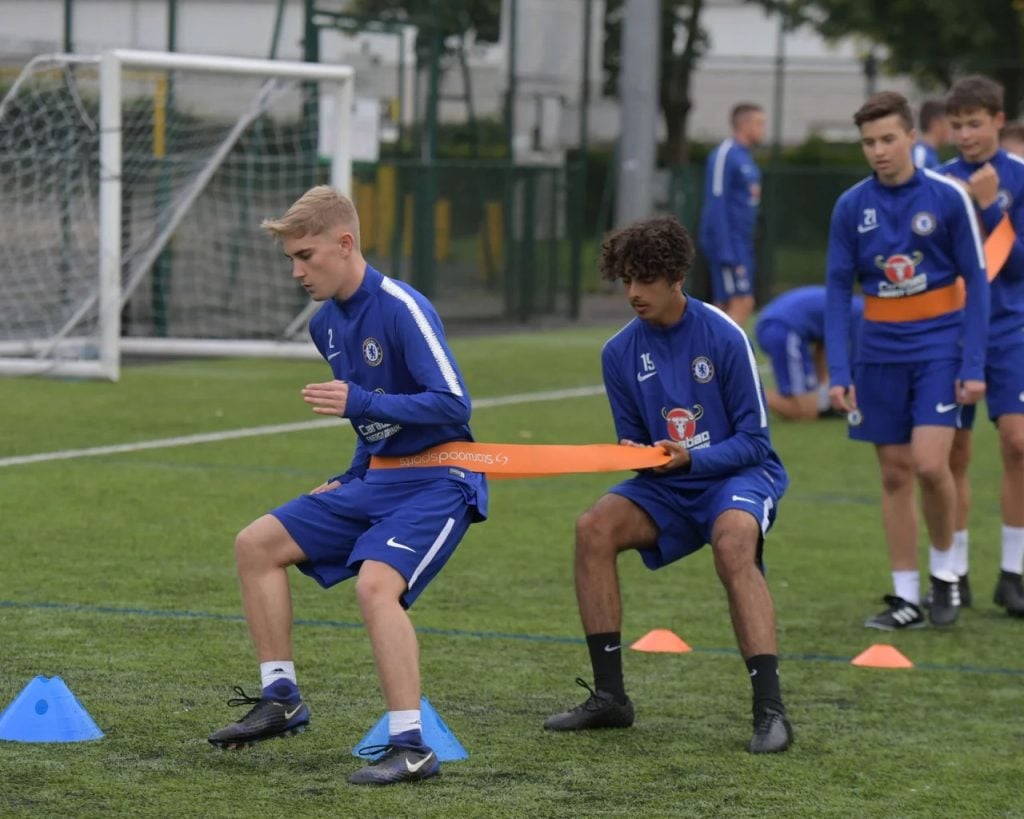
| 08:30 | First training session. On the pitch: technical work or physical preparation. |
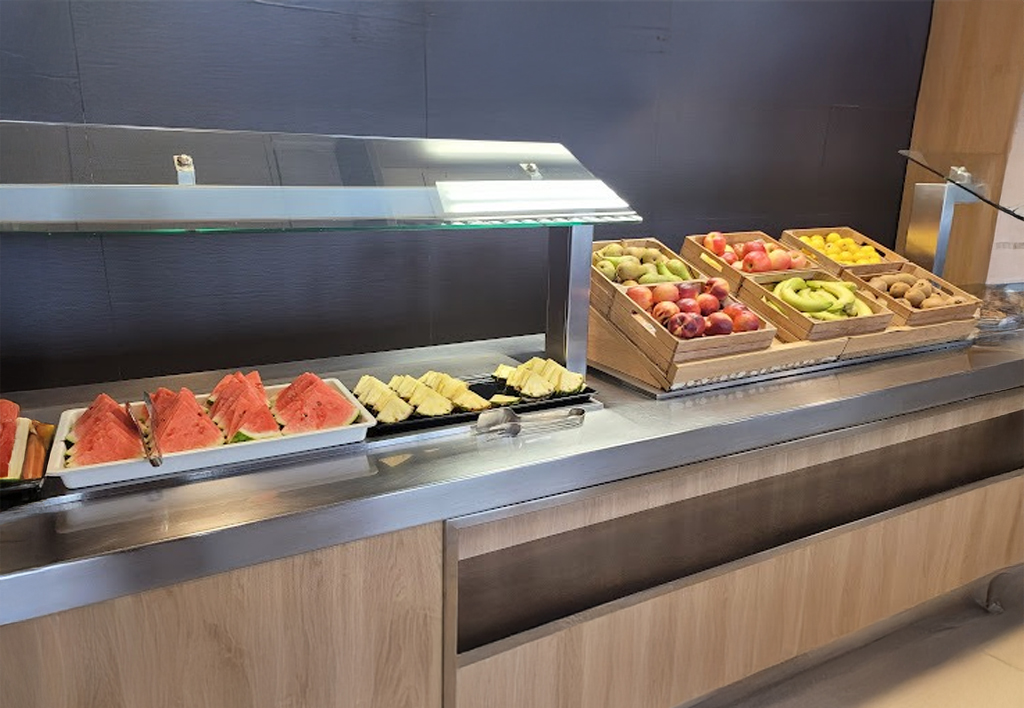
| 10:30 | Shower and full breakfast in the residence dining hall. |
| 11:30 – 13:30 | Academic block I. Classes, tutoring or distance learning, according to the student’s education agreement. |
| 13:45 | Lunch, supervised by the academy’s nutritionists. |
| 15:00 | Academic block II or a video-analysis session. |
| 17:30 | Second training session or gym. Tactical work or match preparation. |
| 20:00 | Dinner and free time: calling family, resting, getting homework done. |
| 22:30 | Lights out. |
The first thing that usually surprises people is that he trains before he has properly had breakfast: a snack at 07:30, the session at 08:30, and the full breakfast afterwards at 10:30. It is not an eccentricity. It is the only way to fit two pitch sessions and four teaching hours into the same day without one of them landing at eleven at night.
The four hours that answer the parent’s question
Between 11:30 and 13:30, and again from 15:00, the player is in class. Those are the hours that decide whether the year counts or not.
And here is the part worth understanding properly, because it separates a serious programme from a promise: the academy does not teach the classes itself. The study side is organised through specific agreements with education providers, designed so that a high-performance athlete can complete his studies without giving up either one. Depending on the player’s age and country, that can mean the Spanish, American or British system, vocational training, university-level study, or preparation for the United States university entrance exam.
The practical difference: the teaching timetable does not move when the fixture list gets busy. It sits in the grid, exactly like training does.
The week, not just the day
The day repeats, but the week has a shape of its own. At the academy in England, for instance, players are split into two groups according to the academic route they are taking, and the two grids are staggered against each other: while one group is in class, the other is on the pitch. At any teaching hour there are players training and players studying.
- Wednesday is match day, morning and afternoon. No classes, no ordinary training.
- Saturday morning is a training session; the afternoon is free.
- Sunday is a full day off.
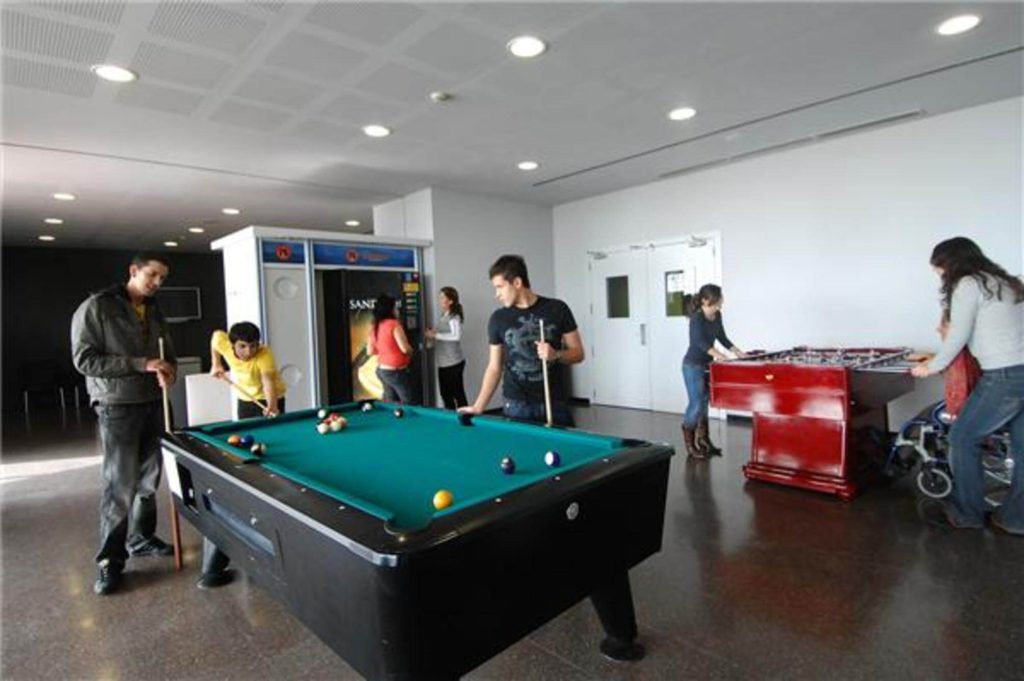
- Every evening has free time and activities. It is not a day that ends on the pitch and continues in the bedroom.
What changes from one academy to another
This needs saying plainly: the timetable above is one specific academy’s, and it is not universal. What repeats is the structure — two sessions, an academic block, fixed meals, a free evening. The hours move, and sometimes by a lot.
The most striking example is dinner. At the Barcelona academy it is at 20:00. At the one in England, dinner service runs from 17:30 to 18:30, immediately after the afternoon session. To a Spanish or Italian family that hour sounds extraordinary; to an American one it probably will not, and to a British boarding school it is simply normal. Neither is better, but it is exactly the kind of detail worth knowing beforehand rather than on the first Sunday.
The same goes for the number of sessions, the match day and how much gym work there is. If the specific timetable matters to your decision, ask about the specific academy: it is a figure that changes by centre and by season.
What this timetable actually tells you
From a distance the grid looks demanding, and it is. But what counts for the decision are three things you only see by reading it slowly:
- School has a fixed slot. It is not what gets cut when there is a match. It takes four hours of the day and sits inside the grid, not alongside it.
- There is real rest. Free time every evening, a Saturday afternoon and a whole Sunday. A fifteen-year-old training twice a day needs it, and a programme that does not allow for it is a badly designed programme.
- Meals are supervised. Five sittings arranged around the effort, not whenever. If that part interests you, we go into it in the sports nutrition guide for children.
Before committing to a full year
A timetable in a table takes two minutes to read. Living it for ten months is another matter, and there is no honest way to know whether it suits your son without him trying it.
That is why the recommendation before a long programme is always the same: one or two weeks first, at that same academy. It lets you see it, and it does something almost nobody explains: scholarships for the long programmes are only offered to players the academy has seen in person. None of them grants one on the strength of a video. That guarantees nothing, but without it the possibility is zero.
The academies in Spain, with their ages, durations and study plans, are on the football academies in Spain page.