
Most pages about girls football camps are lists. Eight camps, ten camps, ranked, with a photograph each. They are easy to write and they leave a parent exactly where she started, because the question was never which camp is best. It was which kind of camp does my daughter need this summer — and those are two different questions with two different answers.
There are two kinds, they are built for different players, and almost all of the confusion comes from treating them as one category. This guide explains the difference, who each one is for, and how to place your daughter in one of them in about five minutes. Ertheo runs both, and if you already know which you want, the options are on the girls football programmes page.
Table of Contents
The two kinds of girls football camp
| Club camp | High-performance camp | |
|---|---|---|
| Built for | A girl who loves football and loves a club | A girl who wants to find out how far she can go |
| Level it takes | Beginner up to intermediate-high | Intermediate-high up to elite |
| The day | Training, games, and activities off the pitch | Training, physical conditioning, tactical analysis |
| Language classes | Available on several, as an option | Not the point of the programme |
| Who she plays | The other campers | Real matches and tournaments |
| What she brings home | A fortnight she will talk about for a year | An honest read on where her level actually is |
| Girls-only option | Mixed groups, in practice | Yes — one fully girls-only programme |
Neither is the better one. A talented fourteen-year-old sent to a club camp will enjoy herself and learn nothing she did not already know about her own level. A twelve-year-old who plays for fun, sent to a high-performance campus, will spend two weeks being the weakest player on the pitch. The mismatch is the only real way to waste this money.
Club camps: football inside a summer she remembers

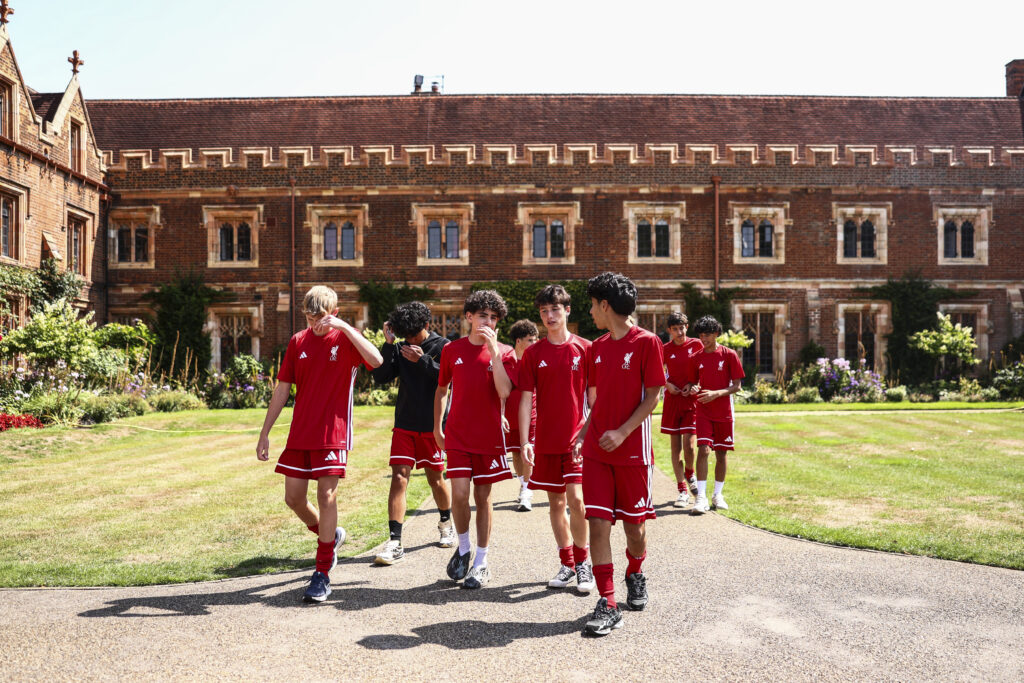
A club camp is run in the name of a professional club, often at its own facilities, and it is designed for a girl who is a supporter as much as a player. Training is adapted by level — it takes complete beginners — and the rest of the day is built like a summer camp, because that is what it is.
The ones that take girls, and the ages they take:
- Arsenal — 9 to 17, all levels, in England. Two routes: an intensive football week, or football plus English lessons.
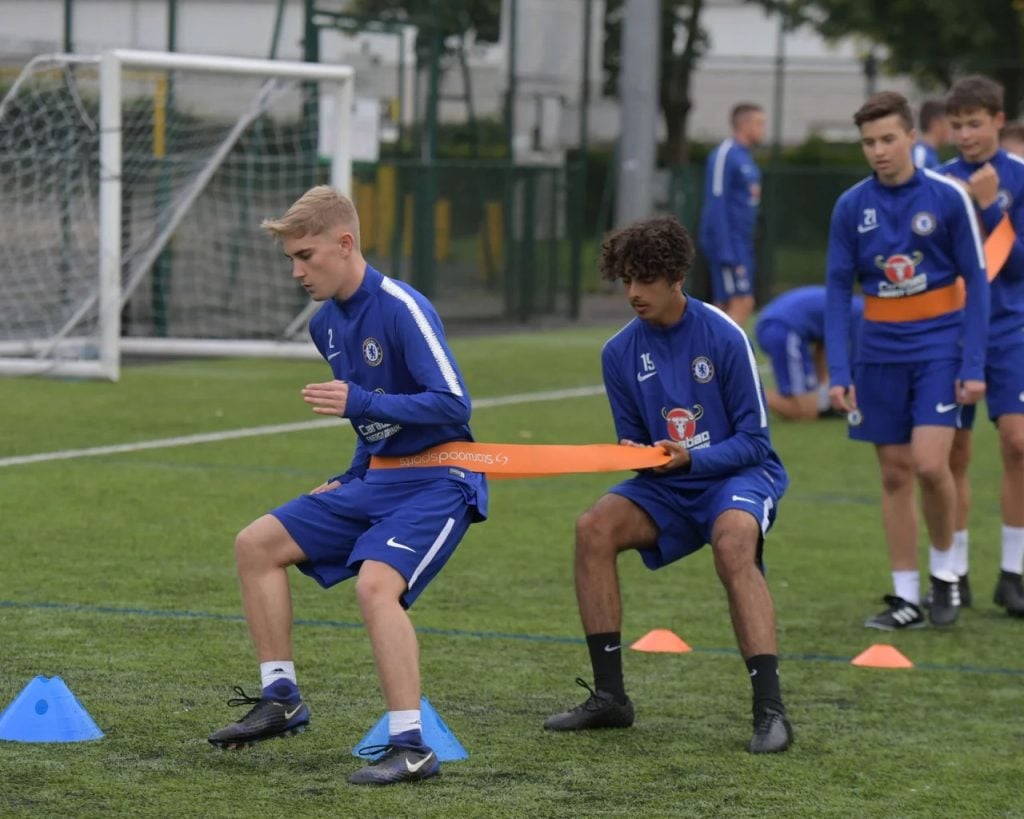
- Chelsea — 10 to 17, intermediate to advanced, in London. One to four weeks, again with an intensive route and a football-plus-English route.
- Manchester City — 9 to 17, with the same two routes.
- Paris Saint-Germain — 13 to 17, all levels, for outfield players and goalkeepers, with optional English or French classes.
- AC Milan — 7 to 17, for intermediate players, in Italy.
- Liverpool, and the FC Barcelona Escola in Barcelona.
Two things are worth knowing before you choose on the badge. These groups are mixed — your daughter will train alongside boys, which for a lot of girls is simply normal and for some is the thing they would rather not do on holiday. And the age bands above are guidance, not an entry requirement: a girl who sits just outside one is a conversation, not a no.
The full list of camps by destination and club carries the dates and the current prices for each.
High-performance camps: finding out where her level is
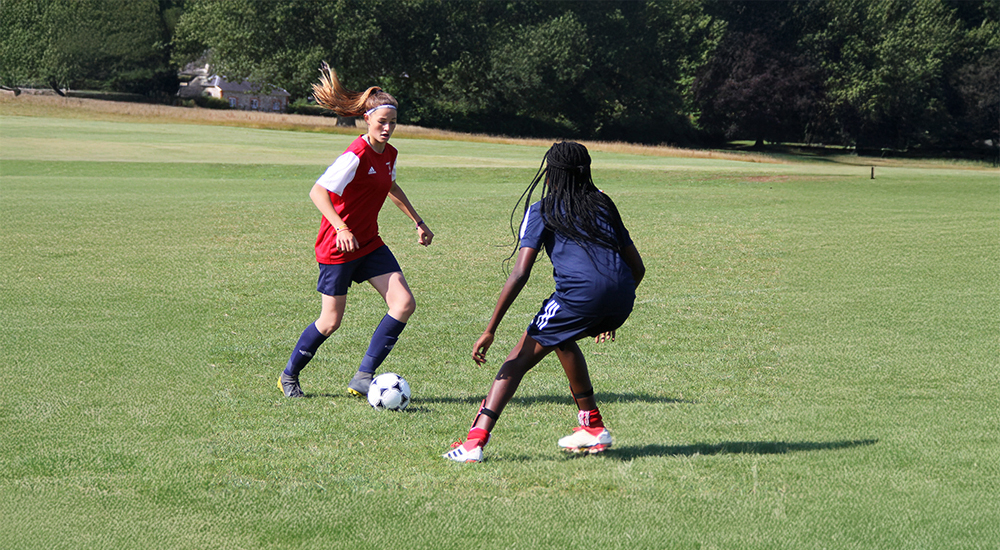
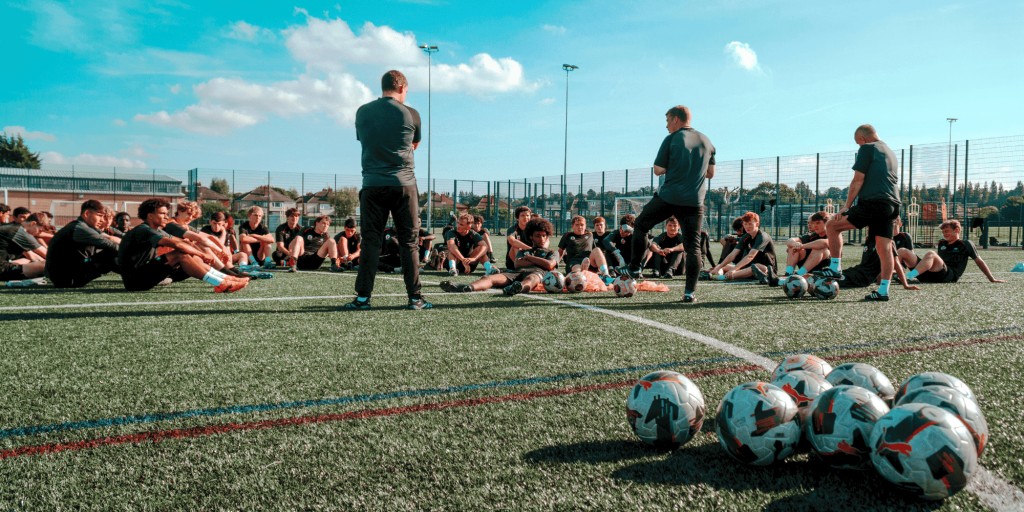
A high-performance camp has a different purpose and it does not hide it. The day is training, physical conditioning, tactical and video analysis, and competitive matches — and the point is not that she enjoys it, though she probably will. The point is that she comes home knowing something she cannot find out at her own club: how she plays against girls she has never met, when nobody on the pitch already knows she is good.
It asks for intermediate-high to elite level. Within Ertheo’s programmes the high-performance options run in Barcelona (advanced to elite, from 6 to 21 depending on the session) and Valencia (12 to 21).
The one that is entirely girls
Everything above puts girls in mixed groups. There is one programme that does not: a high-performance camp in Barcelona built only for girls, running one to three weeks.
Two details about it are the ones that actually matter, and they are easy to skim past. The sessions are led by professional female footballers, which is a different thing from being coached about women’s football by someone who never played it. And it runs video and tactical analysis plus biometric monitoring, so what she is told at the end is a read on her game and not an impression of her week. It is written for teenagers and young adults; the page carries the current band.
If that is the shape you are looking for, it is here: the girls-only high-performance camp in Barcelona.
Girls-only or mixed: the honest answer
Parents ask this one more than any other, and it usually gets answered with an opinion. The useful version is narrower.
Mixed is not a compromise. Most girls playing football already train in mixed or boys’ teams at home and nothing about a mixed camp will surprise them. The physical gap at 9 or 11 is small, and the football is the football.
Girls-only changes two specific things, and if either is live in your house it matters a lot. The first is around 14 to 16, when the physical difference widens and a girl who is used to holding her own suddenly is not — and starts to read that as her ceiling rather than as biology. The second is who she is surrounded by: a squad of girls who all take it seriously, coached by women who made a career of it, is a different fortnight from being the only girl in the group.
So: if she is young, or she is unbothered, mixed is fine and the choice should be made on level and destination instead. If she is in those middle teenage years and has started to go quiet about how far she can get, the girls-only programme is doing something a mixed camp structurally cannot.
Which one she needs — four situations
- She loves football and loves one club in particular. A club camp, and pick it on the badge — that enthusiasm is the whole point and it is not a lesser reason.
- She is clearly the best in her team and you have started to wonder what that means. A high-performance camp. What is missing is not more training, it is a comparison against players she has never faced.
- She is 14 to 16 and has gone quiet about football. The girls-only programme in Barcelona. This is the one case where the format, not the level, is the deciding factor.
- You want her to come back with better English as well. Arsenal, Chelsea and Manchester City each run a football-plus-English route, so the language is timetabled rather than hoped for.
And if you are between two, go for the shorter one. A week tells you most of what a fortnight would, and it costs a week.
Where they run, and what each country is actually good for
Destination is usually the second question and it is rarely the deciding one — but each country does pull in a slightly different direction.
- England. The deepest choice of club camps, and the only place where the football-plus-English route is genuinely built in rather than bolted on. Arsenal, Chelsea and Manchester City all run here. If she is coming back with better English as well, this is the answer.
- Spain. Where the high-performance options sit, in Barcelona and Valencia — and where the only girls-only programme runs.
- France. One club camp, taking outfield players and goalkeepers together from 13, with English or French classes as an option.
- Italy. The youngest starting age of the club camps — from 7 — which makes it the realistic one for a younger sister travelling too.
- The United States. A different proposition again: the year-round academies there take girls on their summer campus, so it suits a family already thinking past one summer.
One practical note that catches people out: a girl who needs a visa should settle that before she settles the destination, because it depends on her nationality and the country rather than on her football, and it has the longest lead time of anything in this process.
And if a camp is not quite the answer
Almost every search for a girls camp happens in spring, for July. One other route is worth knowing about, and it is a different decision rather than a different date.
A full academic year. Some of the year-round academies take girls on their summer campus and, in a few cases, for the whole course — with school inside the programme. That is a different decision from a camp, with a different price and a different set of questions, and it deserves its own answer rather than a paragraph here.
What a camp cannot do
No camp gets your daughter signed. Two weeks in July does not make a professional, and anyone implying otherwise is selling the easiest promise in this industry.
What a camp does is narrower and more useful: it puts her somewhere she can be measured, and it gives you information you do not have at home. For a girl who is the best in her team, that information is the thing that is actually missing — and it is cheaper to get in a week than in a year of wondering.
Where to go next: the girls football programmes, club by club and level by level, or straight to the girls-only camp in Barcelona if that is the one that fits.
Related reading: girls-only training and mixed groups, compared in more depth, and how a camp, a tryout and a full-year academy differ if you are weighing more than one kind of programme.