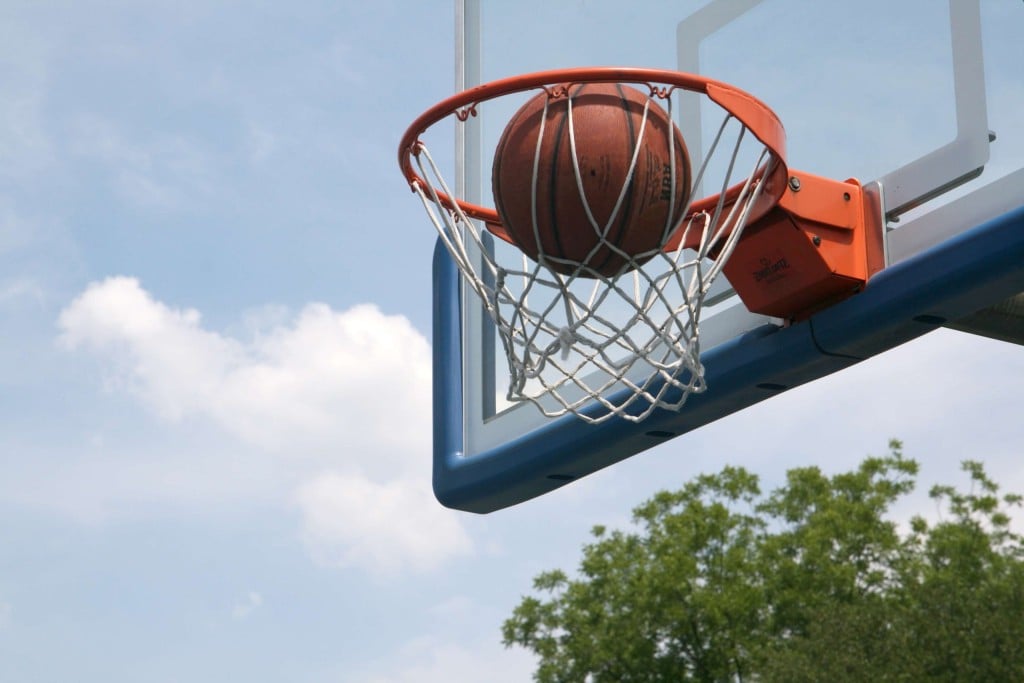

Mini-basketball is a version of competitive basketball designed for boys and girls up to age 12. Through this sport, young players can learn the rules and basic fundamentals of basketball while enjoying a game adapted to their height, skills, and physical development. The main differences between basketball and mini-basketball lie in the dimensions of the court, the height of the hoops, and the size of the ball.
How big is a mini-basketball court?
The mini-basketball court is designed with dimensions adapted for younger players. It must have the same features as a standard court, but with a much smaller standard size, typically 28 x 15 meters. The free-throw line is 4 meters from the backboard. It is also possible to find courts that do not meet these exact measurements, but the same proportions must always be maintained. Courts can range in size from 26 x 14 meters to 12 x 7 meters.
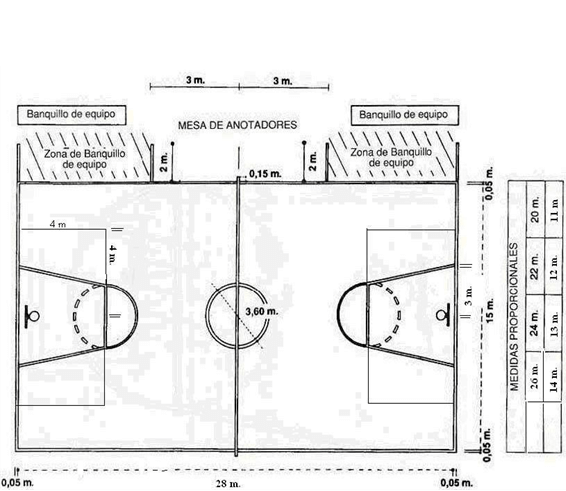
Photo: minibasketballcfuta.blogspot.com
What is the height of a mini-basketball hoop?
The height of the rim also varies depending on the players’ age. For children under 9 years old, the rim is set at about 2.60 meters, while for players over 10 years old, the backboard is placed 3.05 meters above the ground. It’s important to note that these heights are not standard and may vary depending on age.
The mini-basketball
Another factor that varies is the size of the mini-basketball. Children aged 7 to 12 typically use a size 5 ball, which has a circumference of 66 to 73 cm and weighs 450 to 500 grams. In contrast, children under 7 years old use a size 3 ball, with a circumference of 55 to 58 cm and a weight of 310 to 330 grams. As for brands, there is no requirement to use one over another—the club makes the decision—but it is recommended to use high-quality balls to avoid frequent breakage.
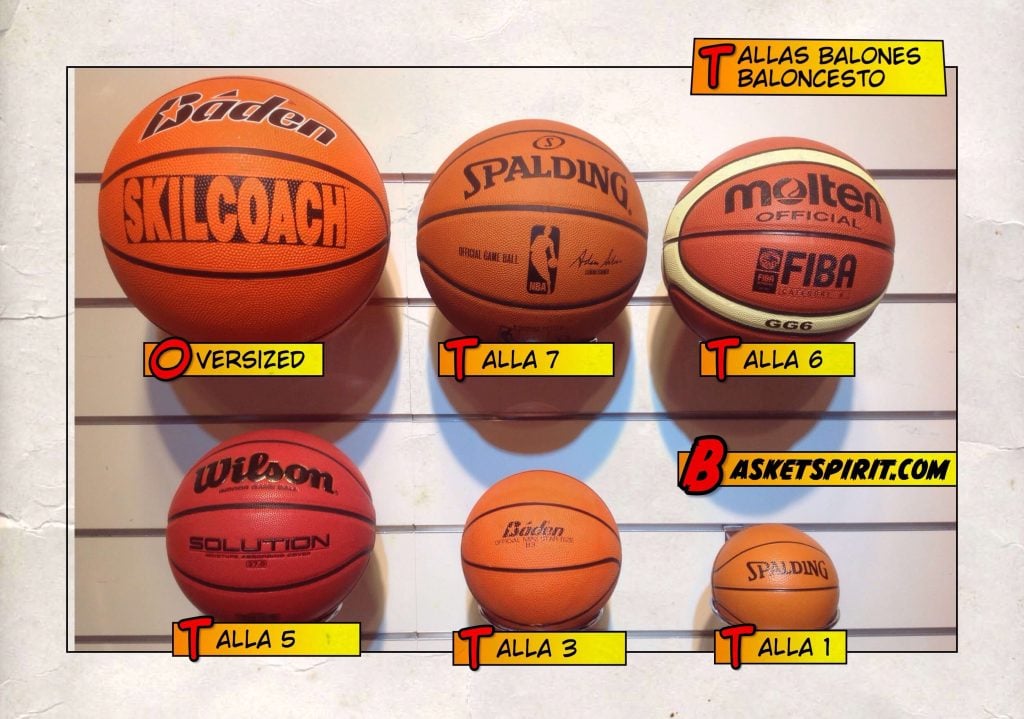
Photo: Basketspirit.com
Basic Rules of Mini-Basketball
Furthermore, just as in regular basketball, mini-basketball is played with two teams of five players, although each team must have a total of 10 players —five on the court and five as substitutes. Each game is divided into two 20-minute halves, with a 10-minute break in between. In turn, each of these halves is divided into two 10-minute periods with a two-minute break between them. Therefore, there are four 10-minute playing periods, separated by successive breaks of two, ten, and two minutes.
Each player on every mini-basketball team must play at least two periods during the game. This rule can only be waived if the player is injured during the game or has been ejected from the court. The rest of the rules governing the flow of the game, fouls, and penalties are exactly the same as those used in regular basketball.
To give you an idea of what a real mini-basketball game looks like, here is the full video of the men’s final of the 2016 Spanish Mini-Basketball Championship:
Is it good to play mini-basketball at a young age?
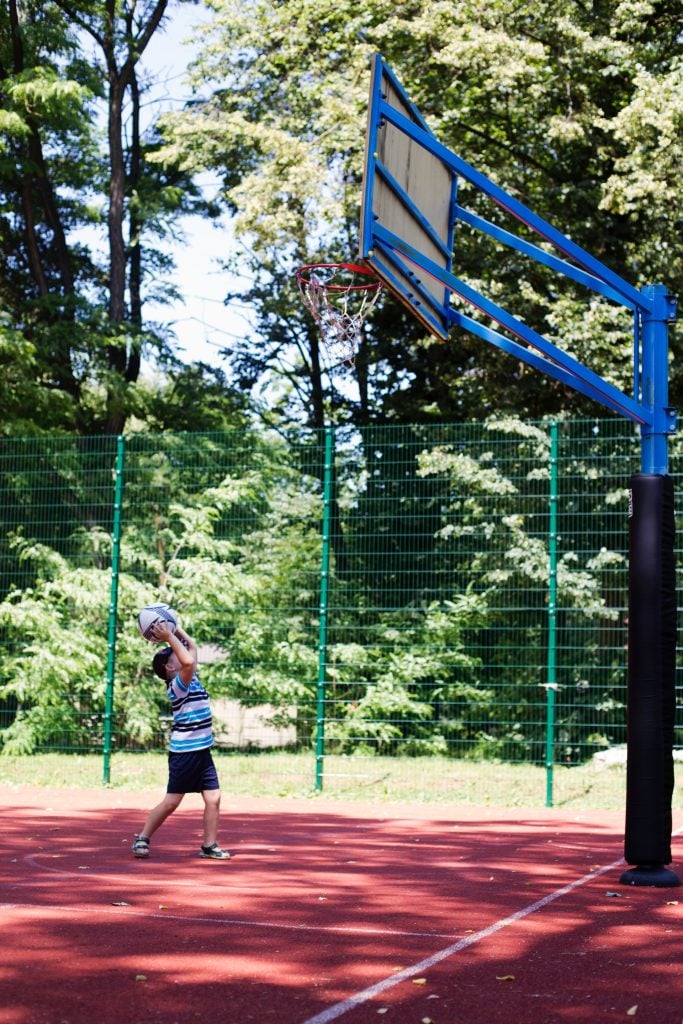
It’s no secret that in sports and physical activities in general, it’s always advantageous to start at a young age.
Mini-basketball is no exception. Playing this sport as a child helps you quickly become familiar with basketball techniques.
Technical aspects like dribbling and shooting start to improve from an early age. This makes the player’s movements look increasingly natural and fluid.
Ultimately, basketball requires a lot of practice to hone your skills. The sooner you start practicing them, the sooner you’ll master them completely.
And that’s not even mentioning the tactics and positioning for offense and defense. Players learn to identify the roles of everyone on the court and take advantage of each position depending on the moment in the game.
This can help the child become a versatile player, capable of playing in different positions on the court and performing at a high level in all of them.
The same goes for the rules. Getting used to all the rules of basketball and understanding them perfectly isn’t something that happens overnight.
Practicing mini-basketball from a young age helps children develop mental agility and know the rules of basketball like the back of their hand.
And if that weren’t enough, playing mini-basketball also has benefits beyond sports for children. It allows them to develop their social skills since it’s a team sport, and it also enhances their problem-solving abilities due to all the situations that can arise during a game.
On the other hand, if a child is enrolled in a basketball course in a foreign country, they can learn and practice that country’s native language naturally.
Learning English, French, or Italian is much easier when you use it every day. Mini-basketball can be the perfect gateway for your child to learn a new language, even without realizing it.
In fact, the same applies to soccer practices or other sports. They can serve as bridges for learning English and other languages.
Benefits of playing mini-basketball at a young age
- Quick grasp of the technical fundamentals of basketball.
- Ability to understand basketball rules and apply them on the court.
- Greater understanding of tactical systems and offensive and defensive plays.
- Enhanced problem-solving skills.
- Contributes to the child’s physical development.
- Development of social skills, as it is a team sport.
- Learning and practicing a new language (in some cases).
Differences between mini-basketball and basketball
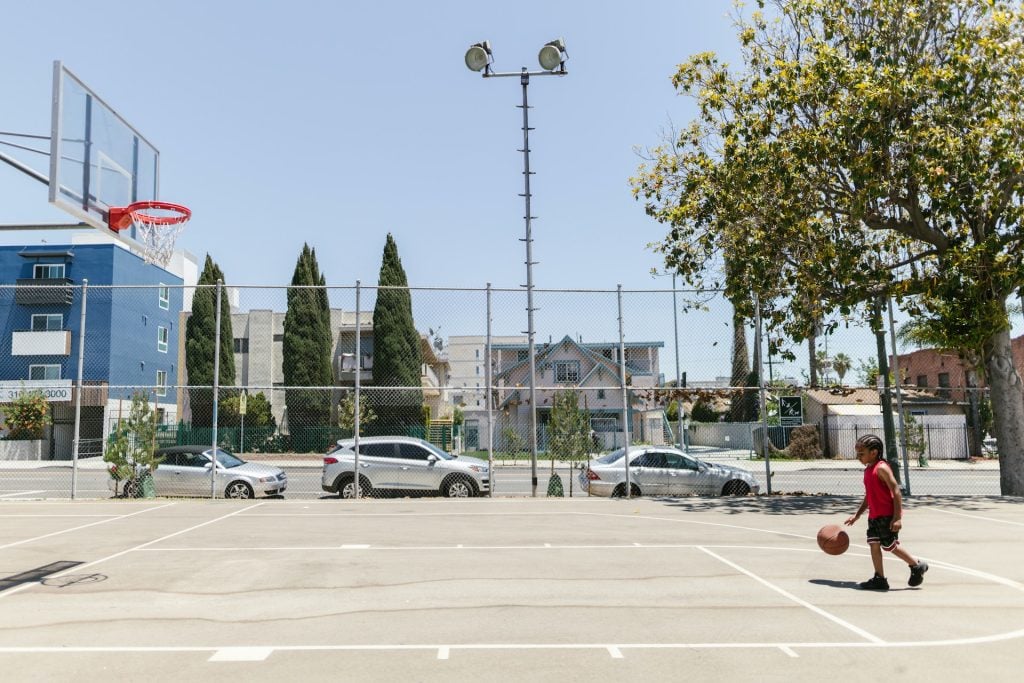
- The height of the hoop is only 2.60 meters.
- The ball is size 5 (varies by age).
- The game clock stops if one team builds a 50-point lead. The game continues until the end, but will conclude with a score of 50 points.
- It consists of two halves of 20 minutes each.
- Each half is divided into two 10-minute periods, with two-minute breaks between them.
- There is a 10-minute break between the two halves.
- All players on the team must be substituted at least twice during the game.
- There is no 24-second shot clock.
- There is no eight-second limit for crossing midcourt.
- Zone defense is not allowed and is penalized with two free throws if detected by the referees.
That said, it is worth noting that mini-basketball is, at its core, conceived as a non-competitive sport designed for children’s recreation.
The ultimate goal of this sport is for players to have fun, play sports, and develop their physical skills during their formative years. These rules are typically used in semi-professional tournaments and more organized competitions, not in simple school practices.
Tips for Choosing Basketball Shoes
More and more children are choosing to play basketball and dream of reaching the top on the court. To become a good player, these young athletes need to start training at a very young age and maximize their skills during practice.
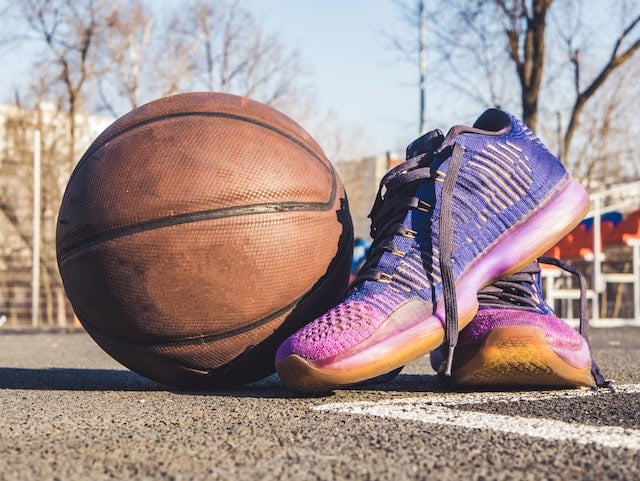
The best way to achieve this is simply to practice for many hours and use the right sports equipment to prevent injuries and perform at the highest level. The most important piece of equipment—and the one that must fit the player perfectly—is the basketball shoe. It needs to fit the foot perfectly, neither too tight nor too loose, and be suitable for basketball; this will help prevent many injuries to the player’s ankles and knees.
After learning about mini-basketball, you might want your child to take up the sport, so here are the basketball camps we offer at Ertheo for boys and girls of almost all ages.